Iconeect2026 Keynote Speakers
"The Importance of an Aim in Life for Sustained Research in Science & Technology:enhancement of the quality of life of own people being the preliminary goal" The main goal of research in science and technology is to use the resources of nature to enhance the quality of life of humankind while maintaining a harmonious environment for all living and non-living beings on the planet. However, as a scientist from a low and medium income country (LMIC) like Bangladesh, where the general people have been perpetually deprived of the benefits of modern science & technology, our immediate goal should be to address the needs of our own people, thereby contributing to redress the huge global disparity. I realized that while early innovators were entrepreneurs themselves, which helped wide dissemination of technology at affordable costs, in the recent times, profit oriented rich business groups took all the innovations into their own folds with the sheer motive of profit. This has been the major contributor to the huge technological and economic disparity and the global deprivation that we see around. After realizing the need of appropriate technology in enhancing the people’s quality of life and the need for innovators turning entrepreneur, I felt the urge to dedicate my life to this cause while I was pursing my PhD in the UK during 1974-78. Therefore, I returned immediately upon completion of my degree in spite of lucrative offers abroad. I also left my field of PhD research, microelectronics, which I felt would not satisfy the needs of our people. Looking for an appropriate field of work, some coincidences brought me to the field of Biomedical Physics & Engineering early in my career. Having dedicated my entire career in this field I could lead innovations in several appropriate healthcare related technologies and products, which I will briefly describe in this lecture. I also took steps to disseminate the technologies among the people, through commercialization of products where appropriate, and this led to a reasonable success. However, as it involves going against the current, lots of obstacles and challenges still keep cropping up and we need to keep striving to overcome these in order to reach our goal, of delivering the benefits of technology to the greater community of people, not only to the few rich ones, as is happening now. This aim is allowing me to continue till now at the age of 76, even after formal retirement 11 years back. While the knowledge, expertise and experience gathered through a lifelong work could help bring improvements to the humankind and the planet and also could help lead teams of younger generation for continuation of work, the retirement concept is depriving the humanity from such human wealth. I feel that as a human being, a special creation of God, I should continue and sustain my research and dissemination efforts till my mind and physique permit. Extending this personal experience to everyone, I reiterate my original contention that it’s the aim in life that is most important in sustaining research in science and technology. Born in 1950, Professor Rabbani did his Bachelors and Masters in Physics, and PhD in Microelectronics. He joined the University of Dhaka in 1978 as an Assistant Professor, becoming an Associate Professor in 1985 and a Professor in 1988. In 2008 he was the Founding Chairperson the Department of Biomedical Physics & Technology at the University of Dhaka retiring in 2015. Since 2016, he is continuing as an Honorary Professor in the same department. Professor Rabbani is also the Founding Director of Dhaka University Telemedicine Programme, Founding Presidents of Relevant Science & Technology Society-Bangladesh, and of BiBEAT Limited, the latter being a non-profit social enterprise to produce and distribute homegrown health, wellness and medical equipment. Although his PhD was in Microelectronics, he left the field and was exploring areas that can provide benefit to the common people directly. Some chance coincidences took him into the area of Biomedical Physics and Engineering. For all of his research work, all the major instruments were developed locally under his leadership, which allowed continuity and success. Professor Rabbani does not take patents for his innovations. He supervised more than 100 thesis students at Masters, M. Phil and PhD levels, wrote several books and book chapters, published more than 140 peer reviewed papers, and gave more than 180 invited lectures at home and abroad. He received several awards from different scientific bodies in the country and is a member of several learned societies at home and abroad. The quest for science allowed him to grow insights in different aspects of human life and society which may have important contributions in improving human life on this planet.
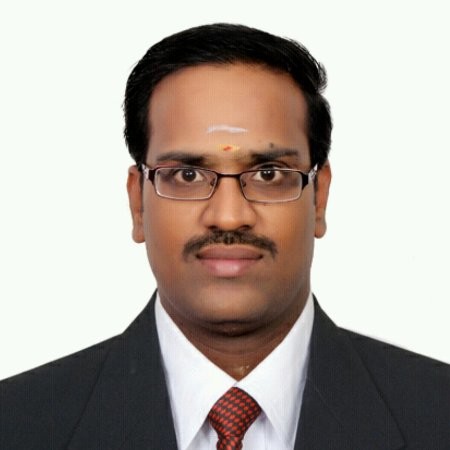
"From Circuits to Cognition: Engineering the Intelligent Future" Artificial Intelligence is no longer merely a software technology, it is becoming an integral layer of modern engineering systems. Electronics can now sense, communicate, learn and make decisions; communication networks are becoming intelligent; semiconductor architectures are being redesigned for AI; and cyber-physical systems are evolving from automated systems into adaptive and autonomous systems. This transformation raises a question far more fundamental than “How do we teach AI?” How do we prepare engineers who can engineer with AI? This keynote explores the convergence of Artificial Intelligence, Electronics, Communication, Semiconductors, Edge Computing and Intelligent Cyber-Physical Systems, and examines how this convergence is redefining both engineering practice and engineering education. It will explore the transition from conventional electronics to intelligent electronics, from communication networks to AI-native networks, and from hardware-software integration to AI-hardware co-design. The keynote will further examine the implications for universities and research ecosystems. Engineering education must move beyond adding isolated AI courses towards creating AI-ready engineers who combine strong engineering fundamentals with AI literacy, systems thinking, creativity, experimentation and ethical judgement. Similarly, research must increasingly become interdisciplinary, connecting AI with electronics, communication, robotics, semiconductor technologies, healthcare, energy and sustainable systems. The central proposition is simple: AI should not replace engineering fundamentals; it should amplify them. The engineer of the future will not merely use AI tools but will design, build, train, integrate, validate and responsibly deploy intelligent systems. The keynote concludes by presenting a vision for the AI-ready university, where curriculum, faculty, laboratories, research, industry partnerships and institutional strategy collectively prepare engineers to move from circuits to cognition and from intelligent tools to intelligent systems Dr. S. Sivaperumal is a Pro Vice Chancellor and Professor of Electronics & Communication Engineering at Presidency University, Bengaluru, India with over 21 years of experience spanning higher education leadership, research, innovation and internationalisation. He currently provides academic leadership to the University's Technology Schools comprising 16,000+ students and 700+ faculty members, while overseeing key portfolios including Academics, Research, IQAC, Innovation and International Affairs. A Senior Member of IEEE and Fellow of IE(I) & IETE, Dr. Sivaperumal is Peer Team Member of NAAC holds two Ph.D.s and has led research and sponsored projects worth more than ₹2 Crore (~ US$230,000) supported through national and international programmes from DRDO, DST, GITA (Indo – Taiwan). He has authored 40+ research articles in Scopus/WoS-indexed journals, including publications in IEEE Transactions, Taylor & Francis and Springer journals, and has an h-index of 13 and citation of over 1200. He holds five granted Indian patents in Communication Systems and Antenna Design. He has travelled across 45+ countries and has extensive experience in global academic collaborations and internationalisation. He is currently pursuing the Senior Management Programme at IIM Ahmedabad.
"Recent Advancements in Signal Processing and AI for Robotics and Health care Applications" Rapid advances in signal processing, artificial intelligence (AI), machine learning, and deep learning are transforming robotics and healthcare by enabling intelligent systems to analyze complex signals, perceive their environments, and support data-driven decision-making. This talk highlights recent developments in audio, visual, biomedical, and multimodal signal processing, with emphasis on their applications in human-centered intelligent systems. In healthcare, AI-assisted processing of biomedical signals and medical images is creating new opportunities for automated screening, diagnosis, monitoring, and clinical decision support. Deep neural networks, attention-based models, ensemble learning, and generative AI are increasingly being applied to EEG, ECG, heart sounds, medical images, and other physiological data for disease detection, abnormality classification, sleep analysis, and personalized healthcare. Privacy-preserving approaches such as federated learning are also becoming important for developing collaborative medical AI systems while protecting sensitive patient information. In robotics, the integration of sensing, computer vision, signal processing, and AI is enabling more autonomous, adaptive, and interactive systems. Deep-learning-based perception, multimodal recognition, reinforcement learning, and intelligent control are supporting applications in assistive robotics, autonomous navigation, environmental monitoring, human–robot interaction, and accessibility technologies such as sign-language recognition. A major trend across these fields is the shift from conventional feature-engineered approaches toward adaptive, multimodal, explainable, and data-driven intelligent systems. The convergence of advanced signal processing with generative AI, lightweight neural networks, intelligent sensors, and edge computing is expected to further enhance real-time performance, reliability, and accessibility. These developments offer strong potential for safer robotics, affordable healthcare, and scalable intelligent solutions addressing practical societal and technological challenges. Celia Shahnaz, SMIEEE, Fellow IEB, received Ph.D. degree from Concordia University, Canada and is currently a professor at, Department of EEE, BUET, Bangladesh since 2015. She was the winner of Canadian Common Scholarship for pursuing her Ph.D study in Canada and recipient of Bangladesh Academy of Science Gold Medal for her contributions in science and technology. The World Academy of Science (TWAS) members have elected her as a Fellow of TWAS for the advancement of science in developing countries, effective 1 January 2023. Recently, her nomination has been approved and she has been inducted into IEEE-Eta Kappa Nu as a Professional Member into the Eta Chapter of the Board of Governors. She has served as 2023-24, Liaison of WIE to IEEE Board of Directors and 2023-25 Member, IEEE in 2050 and Beyond subcommittee. She has been selected and appointed as 2026 IEEE SSIT Education subcommittee, 2025-27 IEEE Computer society Distinguished Visitor. She has been appointed as 2025-26 Chair, IEEE WIE Nominations and Appoints. She has been elected as 2022 IEEE WIE Committee Chair-Elect and she has served as the 2023-2024 IEEE WIE Committee Chair. She has been appointed as 2024-25, Division V Representative, IEEE TAB Award and Recognition Committee , 2024-26 Member, IEEE Fourier Award for Signal Processing Committee , 2024-25 IEEE Computer society Awards Chair, 2025 Member, IEEE CS Diversity and Inclusion Committee, 2024 Member, IEEE CS Election Committee, 2020, 2022-23 Member, IEEE New Initiative Committee, 2021-24 Member, IEEE History Committee, Liaison between IEEE History Committee and IEEE WIE, 2023 Corresponding member, IEEE BOD Ad-Hoc: Coordinating IEEE’s Response to Multimedia-Based Digital Reality Technologies, 2023 Member, the future of the IEEE WIE ILC Adhoc. She has served as 2021-22 Chair, IEEE SPS Women in Signal Processing, 2021-22 Liaison between IEEE SPS and IEEE WIE, 2021-22 Member, IEEE Educational Activities Board Faculty Resource Committee, 2022 Member, IEEE WIE Strategic planning Committee, 2021 Chair, IEEE WIE History Subcommittee, 2020-21 Member, IEEE WIE Senior Member Elevation Drive and 2019-2022 Member, IEEE WIE WePower Subcommittee. She has served as an Editorial board member, IET Signal Processing From 2018 to date. She is the immediate past Chair, IEEE Bangladesh Section, Co-founder & Chair, IEEE EMBS, IAS, RAS, SSIT Bangladesh Chapters, Co-founder & Vice-Chair, IEEE SPS Bangladesh Chapter, Founder and Advisor, WIE AG, and founder and Chair of SIGHT group FLASH, IEEE Bangladesh Section. She is the recipient of the 2025 R10 Outstanding Volunteer Award, 2021 IEEE MGA Achievement Award, 2021 Inspiring Women in Academia Award from Bangladesh brand forum, 2019 R10 Humanitarian Activities Outstanding Volunteer Award, 2016 MGA Leadership Award 2015 WIE Inspiring Member Award, 2013 R10 WIE Professional Volunteer Award. She has more than 25 years of experience (25 years as an IEEE volunteer) in leading impactful Technical, Professional, Educational, Industrial, Women Empowerment, Humanitarian Technology, Power and Energy-related Projects at national/international levels.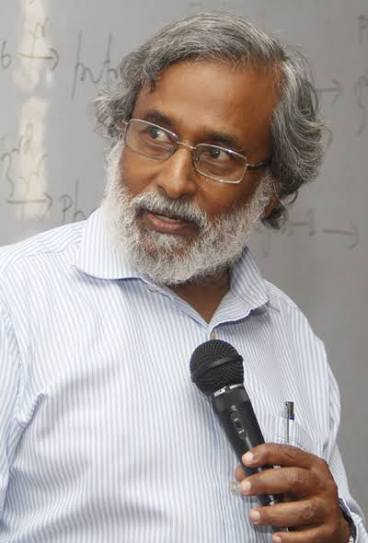
Department of Biomedical Physics & Technology
University of Dhaka
Talk Title
Abstract
Short Biography
 ;
;
Presidency University, Bengaluru, India
Talk Title
Abstract
Short Biography
 ;
;
Talk Title
Abstract
About Us and Contacts
Hosted By

Technical Co-sponsor

About Us
The goal of iCONEECT 2026 is to bring together leading academic scientists, researchers, and professionals from around the world to exchange innovative ideas, share knowledge, and explore recent advancements in the broad domains of Electrical Engineering, Computer Science, Artificial Intelligence, Communication, Robotics, Networking, Optimization, and Emerging Technologies. The conference will serve as a premier platform for presenting cutting-edge research, fostering interdisciplinary collaboration, and discussing future directions that will shape the next generation of systems and technologies.
Quick Links
Get in Touch
- Premier University, Chittagong.
- chair.iconeect2026@puc.ac.bd
- jsec.iconeect2026@puc.ac.bd
- +8801716159860,
- +8801719142953,
- +8801719294157,